
The Trump administration’s civil rights investigations into three Ivy League universities were politically motivated and designed to pressure those institutions into settlements, a former U.S. Department of Justice attorney alleged in a whistleblower account Monday.
Officials pressed for deals with Columbia and Harvard universities despite hasty or incomplete investigations, Haley Van Erem, who worked in the Justice Department’s civil rights division for almost a decade, alleged. At Brown University, officials pursued a deal even after investigators concluded that there wasn’t evidence to support a civil rights violation.
The outcomes of the investigations were “predetermined, without regard to evidence,” the account alleges. Moreover, Trump officials pulled vast sums of federal funding from the universities before probes were even completed.
Lawyers representing Van Erem, who left the Justice Department in May 2025, filed the whistleblower disclosure Monday with congressional leaders on both the House and the Senate’s education and judiciary committees.
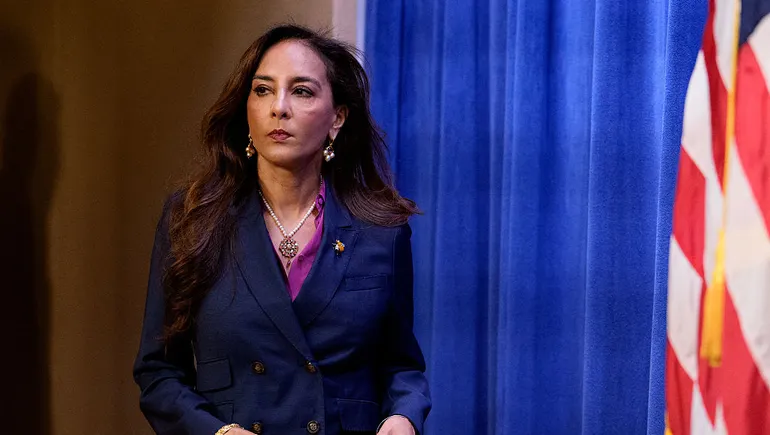
In response, Rep. Jamie Raskin, the top Democrat on the House’s Judiciary Committee, launched an investigation Tuesday into the allegations. In a Tuesday letter to Harmeet Dhillon, assistant attorney general for the DOJ’s civil rights division, he requested troves of documents related to the investigations.
Raskin also said the new account shows “just how far the Trump Administration strayed from any notion of professional responsibility, public ethics, or legal candor in its attacks on perceived political enemies in academia.”
The whistleblower account focuses on the work of the Trump administration’s multi-agency Task Force to Combat Anti-Semitism. Attorneys in the DOJ’s civil rights division, including Van Erem, were reassigned from their ongoing cases to work for the U.S. Department of Health and Human Services to support the task force’s investigations, according to her account.
The White House referred Higher Ed Dive to the DOJ and HHS for comment.
A DOJ spokesperson said in an email Tuesday that Van Erem did not work on university investigations while at the agency. The spokesperson added that it “stands behind the integrity of these investigations.” HHS did not immediately respond to a request for comment.
What happened at Harvard?
What began as an investigation into alleged antisemitism at medical school graduation ceremonies at four universities — Brown, Columbia, Cornell and Harvard universities — soon transformed into much larger probes, Van Erem’s disclosure said.
However, DOJ attorneys grew concerned that Trump officials were using the probe into Harvard as the basis for settlement negotiations — even though investigators had just begun looking into the university, according to Van Erem’s disclosure
In April 2025, Sean Keveney, then-acting general counsel for HHS, told Van Erem that the White House directed the agency to “pull hundreds of millions of dollars from Harvard,” according to the whistleblower account. He told her that he believed “Harvard would settle because they are ‘over the barrel,’” the account says.
Later that month, the Trump administration indeed pulled $2.2 billion in federal grant and contract money after Harvard refused to agree to unprecedented settlement demands, such as requiring the university to audit the viewpoints of their students and employees.
Harvard sued over the funding cancellations shortly afterward — a lawsuit they ultimately won in September, though the Trump administration has since appealed.
In a May 2025 meeting, Daniel Shieh, associate deputy director for HHS’ Office for Civil Rights, told attorneys that officials initially planned for Harvard to be the first example, but they had turned to Columbia after negotiations broke down, according to Van Erem’s disclosure.
Officials target Columbia
In Columbia’s case, HHS expanded its investigation into the entire university after its initial probe into the medical school didn’t turn up much evidence of a Title VI violation, according to Van Erem’s account. Title VI bars discrimination based on race, color or national origin at federally funded institutions.
DOJ attorneys questioned why the Trump administration suspended $400 million of the university’s grants and contracts even though the investigation hadn’t yielded much evidence, the disclosure said.
Although the Trump administration’s announcement of the funding suspension cited the antisemitism investigation, officials told the DOJ attorneys that the Trump administration pulled the funding through separate regulatory powers, her account says.
However, the disclosure argues that this bypasses Title VI’s strict procedures, which require the federal government to determine there had been a violation, provide written notice to the institution and provide an opportunity for a hearing before pulling any funding.
In April 2025, Van Erem was given a draft of the findings into Columbia of discrimination by the Education Department and HHS to review. According to her account, attorneys had only a few hours to review the document, but she raised concerns that many of the allegations involved speech protected by the First Amendment and that some claims were presented as fact even though they were based only on news reports and lawsuits.
HHS’ Office of General Counsel raised similar concerns, according to her account. Although some of the findings based on First Amendment-protected speech were ultimately removed, some portions that were flagged were kept in, the whistleblower report says.
Columbia ultimately struck a deal with the Trump administration, in which it agreed to pay $221 million to the federal government to settle civil rights investigations. It also agreed to numerous policy changes, including ramping up its police force and reviewing certain academic programming, starting with Middle East curriculum.
Officials pursue Brown deal
Attorneys finished their investigation into Brown in late April 2025, finding no evidence of a Title VI violation, according to Van Erem’s disclosure. Although this should have ended the inquiry, Shieh said “there’s no way we’re going to get a letter of no violation cleared,” the account says.
Van Erem left the Justice Department shortly afterward to avoid participating in “politically motivated investigations,” according to the account.
Brown ultimately reached a deal with the Trump administration, agreeing to pay $50 million to workforce development organizations in Rhode Island over the next decade, as well as make some policy changes, to restore its access to federal grant funding.