
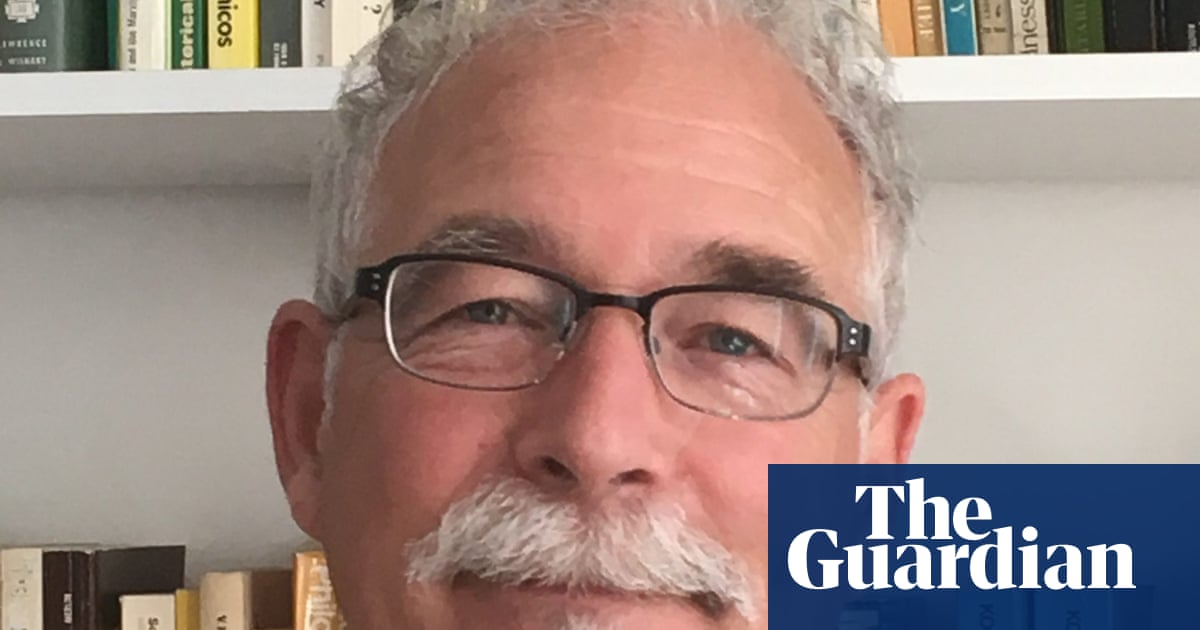

My friend and colleague Gregor McLennan, who has died aged 73 in a climbing accident, was a sociologist and cultural theorist. From 1997 he was professor (later emeritus) of sociology at Bristol University.
He and I met in 1975, as postgraduate students at the Birmingham Centre for Contemporary Cultural Studies (CCCS), under the leadership of Stuart Hall. Officially Gregor was researching the philosophies of the social sciences, yet he was also tempted to explore the significance of the comedian Billy Connolly – a fellow Glaswegian.
The philosophy won out, but the habits of convivial Glasgow remained in him: the knowing laughter, the delight in incessant discussion and his readiness to reach for the guitar.
As a small boy he had moved with his family from central Glasgow to Castlemilk, in the south of the city, and attended Glenwood secondary school until his early teens. His father, Gordon McLennan, was a draughtsman and a rising figure in the Communist party, becoming general secretary in 1975; his mother, Mary Reid, was a secretary and community activist. Theirs was a family in which the life of the mind was prized and the welfare of others valued.
In 1966, as his father’s political leadership advanced, the family left Scotland for Brixton, south London. From Tulse Hill school he went to Bristol University to study philosophy and literature, and then to the CCCS at the University of Birmingham. In 1980, he followed Hall to the Open University, working with him there for the next decade, developing new courses in sociology and, particularly, in the role of the state.
In 1991 he moved to New Zealand with his partner, Suzanne Battleday, and their son, Ruaridh, to head the department of sociology at Massey University for six years; their second son, Finn, was born there. They found New Zealand, its landscape and people, welcoming for a young family.
Gregor’s doctorate, Marxism and the Methodologies of History, was published in 1981, and a string of volumes followed, critically engaging with the conceptual basis of the social sciences.
His last book was his best: the collection of Hall’s work on Marxism (Selected Writings on Marxism, 2021). Hall was mentor and friend, and the warmth is apparent.
Scholarly research consumed much of his life, but seriousness and mirth were never far apart. His professional writing co-existed with fabulous emails in which the pretensions of the academy were restaged as pantomime.
He was also committed to making institutions work. At Bristol, he took on many responsibilities, always showing concern for colleagues and students: he was head of the sociology department; head of the school of sociology, politics and international studies; director of the Institute of Advanced Studies; and warden of the students’ residence Goldney Hall. The same generosity of spirit was apparent in his dedication to Hall’s legacy and the Stuart Hall Foundation, as a founding trustee from 2015 to 2026.
A keen mountaineer, as well as an enthusiastic golfer and cyclist, he died in Snowdonia (Eryri) after a fall doing a scrambling route near the top of Carnedd Y Filiast.
He is survived by Suzanne, Ruairidh and Finn.