

SCHOOL WORLD  - NEWS
  • Home
  • EDUNEWS
  • EDUVLOG
  • EDUTECH
  • SCIENCE
  • BUSINESS
  • HEALTH
  • SPORTS
  • WORLD
  • EDUTAINMENT
  • RADIO
  • CONTACT US
No Result
View All Result
  • Home
  • EDUNEWS
  • EDUVLOG
  • EDUTECH
  • SCIENCE
  • BUSINESS
  • HEALTH
  • SPORTS
  • WORLD
  • EDUTAINMENT
  • RADIO
  • CONTACT US
No Result
View All Result
SCHOOL WORLD  - NEWS
No Result
View All Result
Home Business

A New Window to the Cosmos

SchoolWorldMedia by SchoolWorldMedia
March 28, 2022
in Business
0
A New Window to the Cosmos
0
SHARES
6
VIEWS
Share on FacebookShare on Twitter


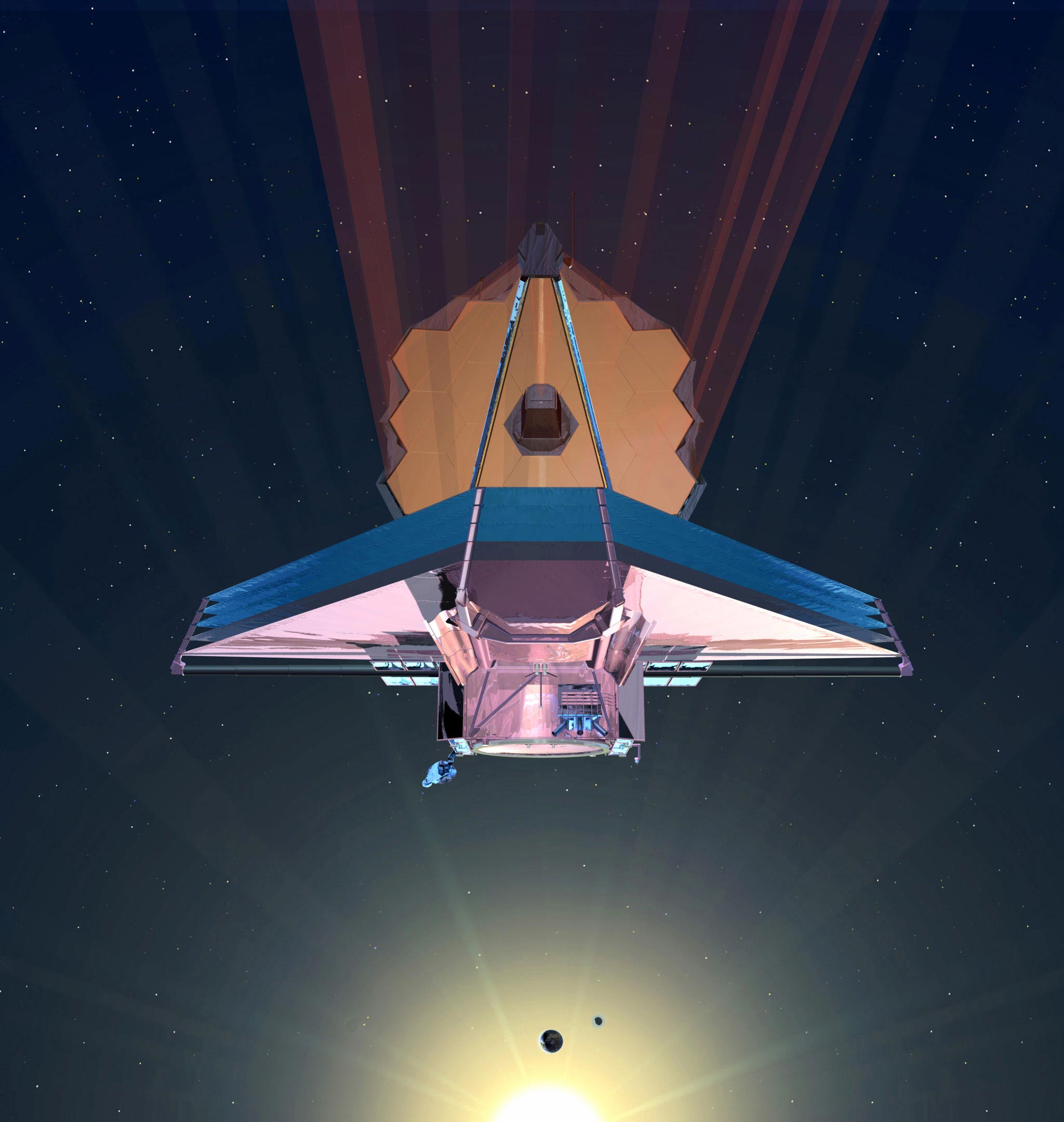
Webb Telescope Artist's Conception

Artist’s conception of the Webb Telescope in space. Credit: NASA

The James Webb Space Telescope (Webb) will observe the Universe in the near-infrared and mid-infrared – at wavelengths longer than visible light.

By viewing the Universe at infrared wavelengths with an unprecedented sensitivity Webb will open up a new window to the cosmos. With infrared wavelengths it can see the first stars and galaxies forming after the Big Bang. Its infrared vision also allows Webb to study stars and planetary systems forming inside thick clouds of gas and dust that are opaque to visible light.

The primary goals of Webb are to study galaxy, star, and planet formation in the Universe. To see the very first stars and galaxies that formed in the early Universe, we have to look deep into space to look back in time (because it takes light time to travel from there to here, the farther out we look, the further we look back in time).

The Universe is expanding, and therefore the farther we look, the faster objects are moving away from us, redshifting the light. Redshift means that light that is emitted as ultraviolet or visible light is shifted more and more to redder wavelengths, into the near- and mid-infrared part of the electromagnetic spectrum for very high redshifts. Therefore, to study the earliest star and galaxy formation in the Universe, we have to observe infrared light and use a telescope and instruments optimized for this light like Webb.

Star formation in the local universe takes place in the centers of dense, dusty clouds, obscured from our eyes at normal visible wavelengths. Near-infrared light, with its longer wavelength, is less hindered by the small dust particles, allowing near-infrared light to seep through the dust clouds. By observing the emitted near-infrared light we can penetrate the dust and see the processes leading to star and planet formation.

Objects of about Earth’s temperature emit most of their light at mid-infrared wavelengths. These temperatures are also found in dusty regions forming stars and planets, so with mid-infrared radiation we can see directly the glow of this slightly warm dust and study its distribution and properties.






Source link

Previous Post

Modern Animal Life Could Have Origins in a Shallow, Nutrient-Rich Delta

Next Post

FDA Skeptical of Benefits From Experimental ALS Drug | Business News

SchoolWorldMedia

SchoolWorldMedia

Next Post
FDA Skeptical of Benefits From Experimental ALS Drug | Business News

FDA Skeptical of Benefits From Experimental ALS Drug | Business News

Leave a Reply Cancel reply

Your email address will not be published. Required fields are marked *

Recent News

References: The Anatomy of a Biliteracy Learning Walk (August 2026)

References: The Anatomy of a Biliteracy Learning Walk (August 2026)

August 5, 2026
3 ways I use 3D printing to keep my photography hobby from sending me into bankruptcy

3 ways I use 3D printing to keep my photography hobby from sending me into bankruptcy

August 5, 2026
OPINION: America’s teacher shortage is worse than you think. But there’s a way to fix it

OPINION: America’s teacher shortage is worse than you think. But there’s a way to fix it

August 5, 2026
Crab Sports promo code for 2026: 100% first bet profit boost up to 0

Crab Sports promo code for 2026: 100% first bet profit boost up to $500

August 5, 2026
Follow Us:

Browse by Category

Business
Edunews
Edutainment
Eduvlog
Election
Health

Science
Sports
Technology
World

Recent News

References: The Anatomy of a Biliteracy Learning Walk (August 2026)

References: The Anatomy of a Biliteracy Learning Walk (August 2026)

by SchoolWorldMedia
August 5, 2026
0

3 ways I use 3D printing to keep my photography hobby from sending me into bankruptcy

3 ways I use 3D printing to keep my photography hobby from sending me into bankruptcy

by SchoolWorldMedia
August 5, 2026
0

@ 2023 – All Rights Reserved by > SchoolWorldMedia.com | Privacy policy

No Result
View All Result
  • Home
  • EDUNEWS
  • EDUVLOG
  • EDUTECH
  • SCIENCE
  • BUSINESS
  • HEALTH
  • SPORTS
  • WORLD
  • EDUTAINMENT
  • RADIO
  • CONTACT US

© 2026 JNews - Premium WordPress news & magazine theme by Jegtheme.