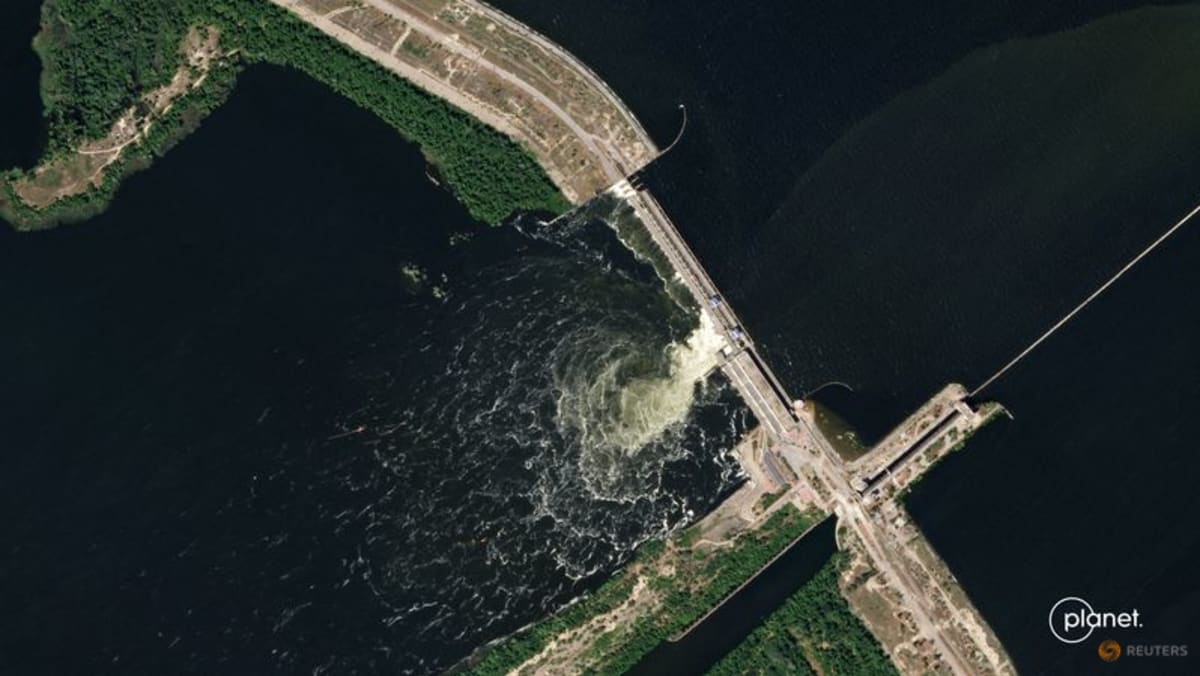

Theoretically, emptying the reservoir upstream of the dam threatens the water supply to the Zaporizhzhia nuclear power plant.
But since its six reactors have been shut down and need less cooling water, the facility’s pond should be ample. Still, some kind of nuclear incident at Zaporizhzhia as a weapon of war now seems less implausible than it once did.
The bursting of the dam fits with Moscow’s razed-earth strategy of destroying Ukraine’s vital infrastructure, degrading its economy and exhausting then displacing local populations.
The facility channels water for irrigation to otherwise arid farmland in south central Ukraine, a major grain producing area. It also provides drinking water for large cities including Krivyi Rih as well as to Russian-occupied Crimea via a canal.
Moscow will have to grapple with alternative sources of supply to the peninsula. But for the moment, the Kremlin seems more preoccupied with thwarting Ukraine’s military advances wherever and however it can.
The destruction of the Kakhovka dam sends a message that Moscow is still capable of escalating its war. The question is how far is it prepared to go. It wants Ukraine and its Western allies to believe it has multiple options left.