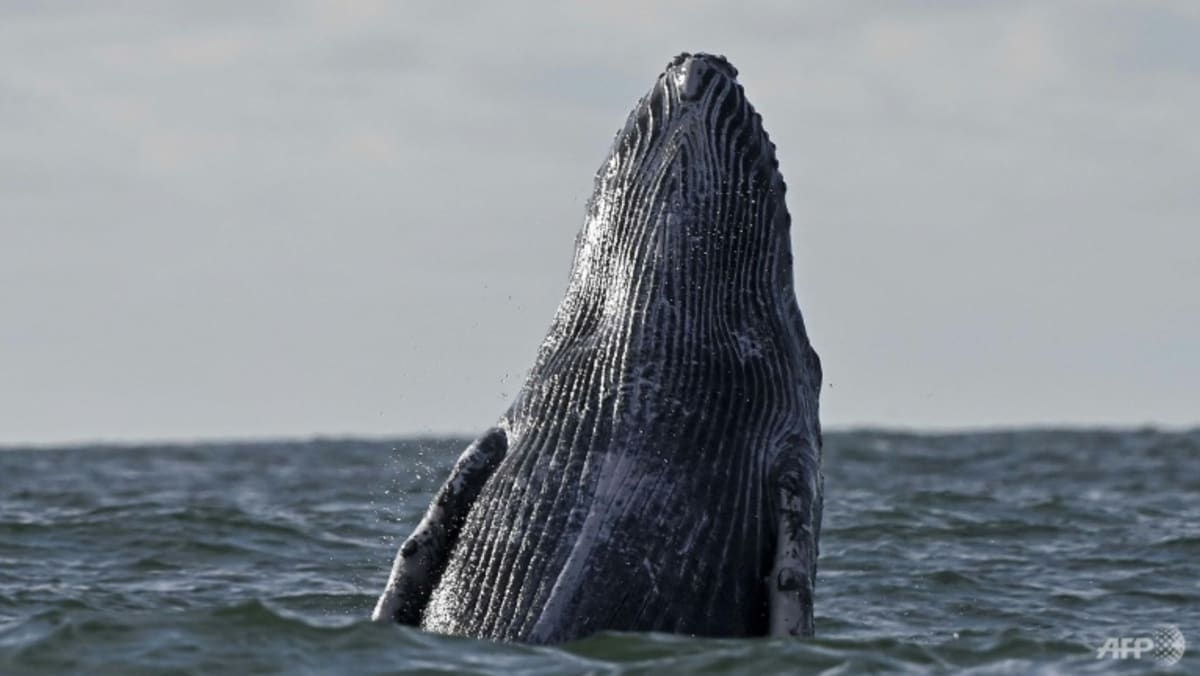

PARIS: Scientists warned on Tuesday (Feb 14) that controversial seabed mining could significantly threaten ocean ecosystems and especially affect blue whales and other cetaceans already stressed by shipping, pollution and climate change.
A study in the journal Frontiers in Marine Science found that commercial-scale extraction of valuable minerals from the ocean floor, which could begin for the first time later this year, would damage habitats and interfere with the way cetaceans communicate.
Earlier research has detailed the likely destructive impact of deep-sea mining on the ocean floor. The new analysis by the University of Exeter and Greenpeace Research Laboratories shifts the spotlight to marine megafauna and noise pollution.
“Cetaceans rely on sound for every aspect of their behaviour, such as foraging, breeding and navigation,” Kirsten Thompson, the lead author of the study and a lecturer in marine mammal biology at the University of Exeter, told AFP.
“That’s why noise pollution from deep seabed mining is a particular concern.”
The report points to overlap between the frequencies at which cetaceans communicate and the sound that would be generated by drilling, dredging and the acoustic telemetry needed to remotely operate vehicles mining the seabed.
This phenomenon, called “auditory masking”, has been previously shown to interfere with the communications of marine mammals and to alter their behaviour.
Underwater noise generated by industrial or military operations can induce foraging whales to surface more quickly than normal, increasing the risk of gas bubbles forming in the bloodstream, which can in turn lead to stranding and death.
Other research has found that man-made noise increased the risk of separation between humpback whales and their calves, which communicate via quiet vocalisations.