
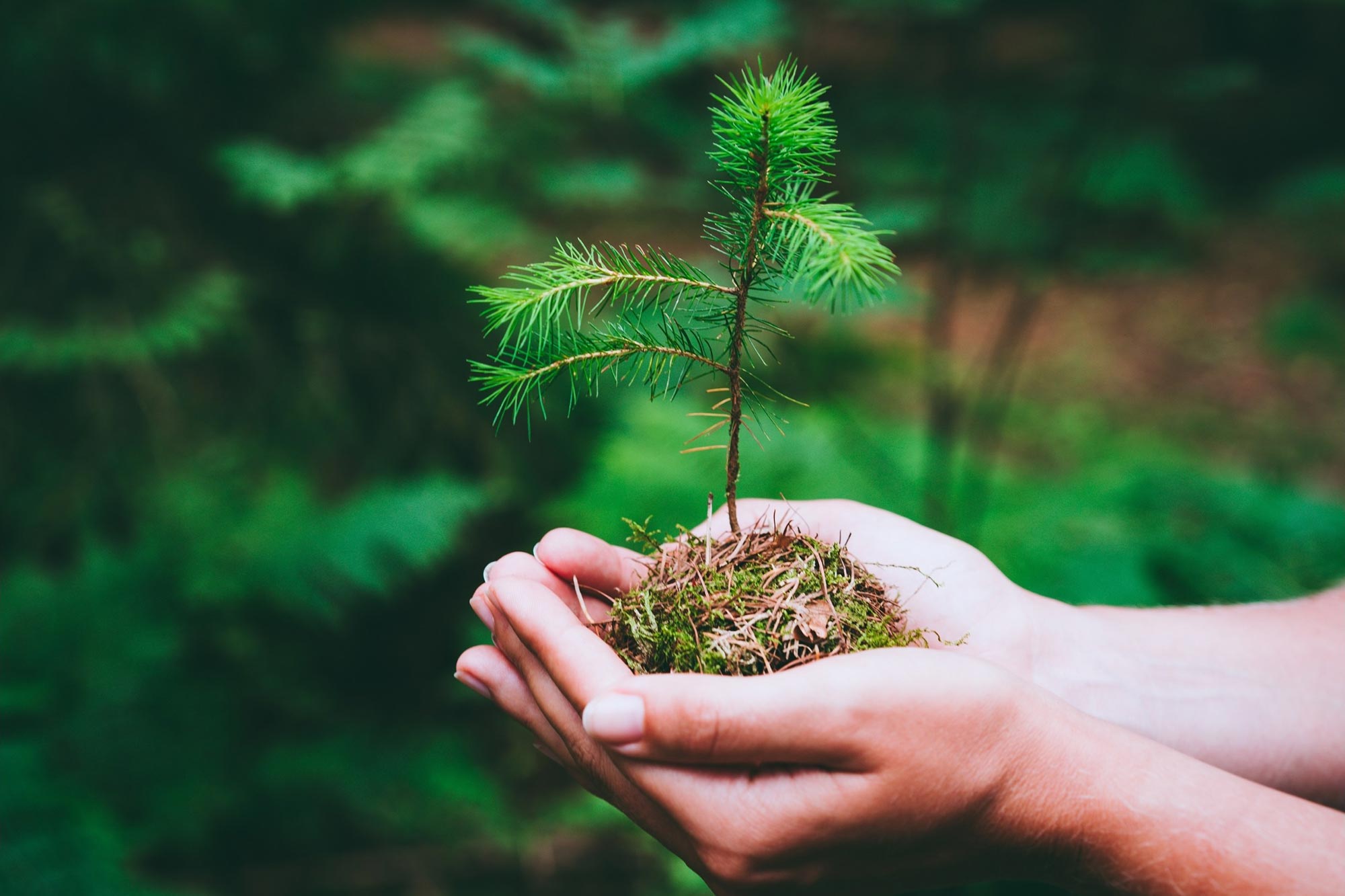

The ability of a plant to re-direct the development of its shoots in the direction of a light source is known as phototropism.
An international team is now one step closer to explaining a central observation.
Charles Darwin has had a greater influence on science than most. Though his research on the Galápagos Islands and his theories on evolution are widely known, fewer people are aware of his contributions to plant science. A multinational research team has now achieved a significant advancement in the explanation of a key observation that dates back to Darwin.
Darwin noted that plants might grow in a certain direction in response to environmental cues like light or gravity in his book The Power of Movement in Plants published in 1880. He provided evidence that the portion of the plant that receives the stimulus and the portion that reacts is distinct. Darwin claimed that in order to explain this, an “influence” must move from the domain of stimulus perception to the area of reaction. However, Darwin would never be able to identify this influence.
This “growth accelerating substance” was discovered to be the hormone auxin in 1926, and it was subsequently discovered that auxin is the growth factor that controls the majority of plant responses to environmental changes. However, directed transport of the auxin molecule across cells is necessary to make sure that the auxin response is allocated to the appropriate area of the plant.

The schematic drawings are original drawings from Darwin. Credit: Rune Kidmose
In the 1990s, a family of proteins named PIN-FORMED (PIN) was finally identified as essential for this process. They got the name from the distinct morphology derived if they are dysfunctional: The plant became a needle-like ‘pin’, without shoots or flowers.
The PIN proteins turned out to be auxin transporters. Their function is vital for the establishment of auxin gradients within plant tissues. A gradient that subsequently guides plant growth and development.
The Pedersen group has now provided the first structural basis of auxin transport by PIN proteins, and this has been combined with a comprehensive biochemical characterization with collaborators at the Technical University of Munich led by Associate Professor Ulrich Hammes.
The results finally provide the molecular mechanism behind auxin transport. It also helps to explain how a broad range of widely used herbicides, collectively known as synthetic auxins and anti-auxins, can be recognized by PIN proteins.
The results have been long underway
The project came to be due to a range of surprising and serendipitous connections, explains the head of the study Associate Professor Bjørn Panyella Pedersen:
“We initiated the project in 2016 when, by chance, I heard a broad presentation on plant physiology where auxin was mentioned in passing. This reminded me of my studies in biology when I was a biology student, and I decided to read up on the subject. To my amazement, there was no biochemical or structural characterization, and I felt that this was a place where we could make a difference.”
However, efforts were mostly stalled for almost a year until Ulrich Hammes reached out to the Pedersen lab to collaborate on a completely different project related to ion balances in algae.
“We quickly discovered our mutual interest in auxin transport and started a very fruitful collaboration on this topic”, Bjørn elaborates, “After this, it still took my group four years to develop a biochemical sample that was good enough to provide data, and this was the concentrated effort of two excellent postdocs in the lab, initially Mikael Winkler and later Kien Lam Ung. This project is a nice example of an old tenet in our research field, “Junk in – Junk out.”
Once the group managed to create a good quality sample, progress was fast and furious. Within a year, all the data was collected and the manuscript was written and submitted. The review process was equally fast, taking four months from initial submission to final acceptance.
“Getting these results felt almost like we had found a missing puzzle piece that people have been looking for for a century. It is one of those results you just want to share as soon as you can”, says Kien Lam Ung, one of the two shared first-authors on the paper, “It has been a wild ride. We couldn’t have done it without the support of so many people, not to mention the EMBION microscopes where we gained access with short notice after an expedited fast-track application. We learned a lot in the process.”
The group of Bjørn Panyella Pedersen specializes in understanding proton-driven transport processes across cell membranes, and their work is often highly relevant for the plant physiology field.
Reference: “Structures and mechanism of the plant PIN-FORMED auxin transporter” by Kien Lam Ung, Mikael Winkler, Lukas Schulz, Martina Kolb, Dorina P. Janacek, Emil Dedic, David L. Stokes, Ulrich Z. Hammes, and Bjørn Panyella Pedersen, 29 June 2022, Nature.
DOI: 10.1038/s41586-022-04883-y