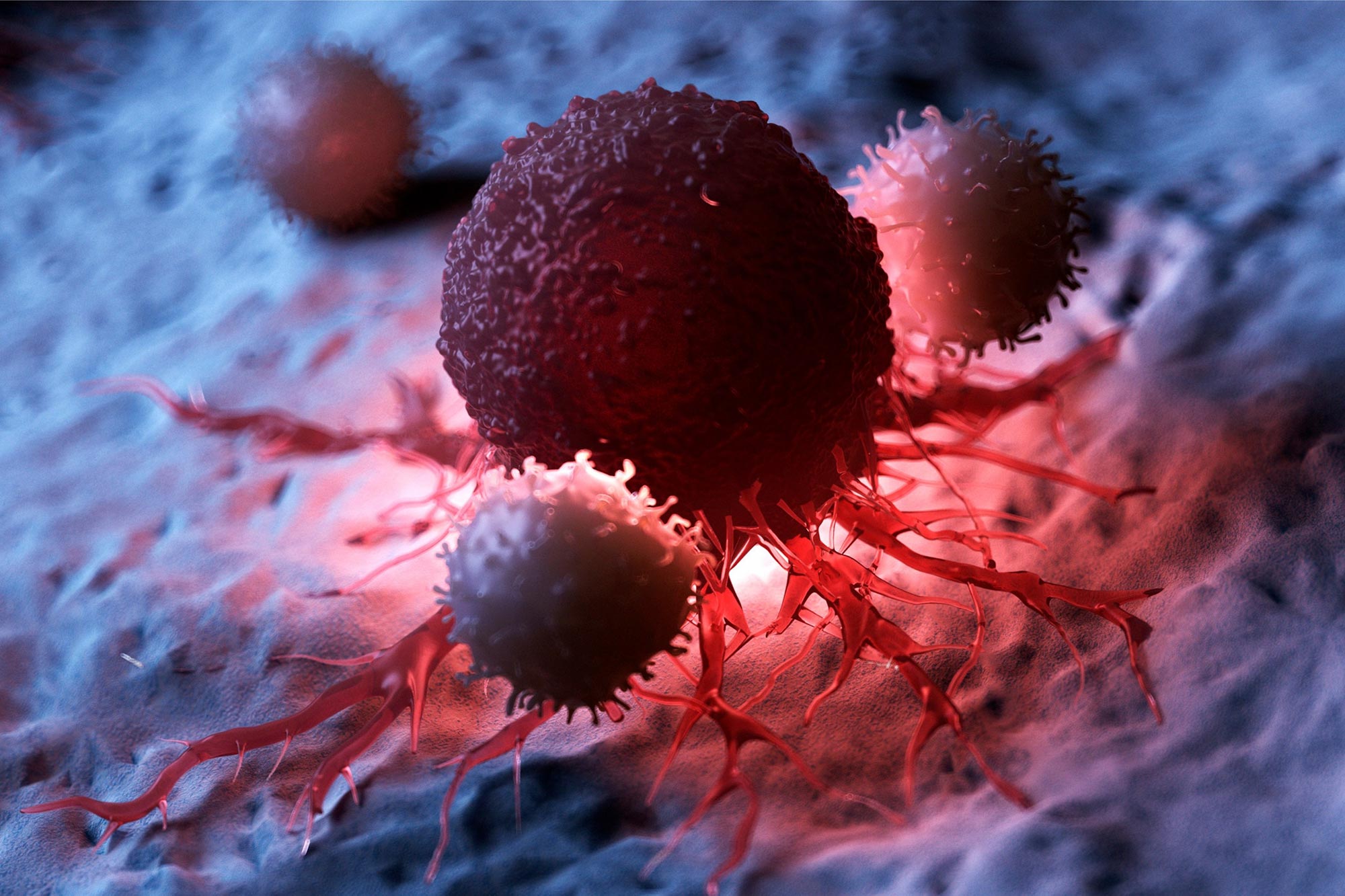


A research team from the Korea Institute of Science and Technology has developed ‘nanomachines,’ which use mechanical molecular movements to penetrate and destroy cells. Selective cancer cell penetration is also possible by using a latch molecule released near cancer cells.
Researchers have created ‘nanomachines’ that use mechanical molecular motions to enter and destroy cells.
Cancer is a condition where some of the body’s cells grow out of control and spread to other bodily regions. Cancer cells divide continually, leading them to invade surrounding tissue and form solid tumors. The majority of cancer treatments involve killing the cancer cells.
According to 2020 estimates, 1.8 million new instances of cancer were diagnosed in the US, and 600,000 people passed away from the condition. Breast cancer, lung cancer, prostate cancer, and colon cancer are the most common cancers. The average age of a cancer patient upon diagnosis is 66, and individuals between the ages of 65 and 74 account for 25% of all new cancer diagnoses.
Proteins are involved in every biological process and use the energy in the body to change their structure via mechanical movements. They are referred to as biological ‘nanomachines’ since even minor structural changes in proteins have a substantial impact on biological processes. To implement movement in the cellular environment, researchers have focused on the development of nanomachines that imitate proteins. However, cells use a variety of mechanisms to defend themselves against the effect of these nanomachines. This restricts any relevant mechanical movement of nanomachines that could be used for medical purposes.
The research team headed by Dr. Youngdo Jeong from the Center for Advanced Biomolecular Recognition at the Korea Institute of Science and Technology (KIST) has reported the development of a novel biochemical nanomachine that penetrates the cell membrane and kills the cell via the molecular movements of folding and unfolding in certain cellular environments, such as cancer cells. They collaborated with the teams of Professor Sang Kyu Kwak from the School of Energy and Chemical Engineering and Professor Ja-Hyoung Ryu from the Department of Chemistry at the Ulsan National Institute of Science and Technology (UNIST), and Dr. Chaekyu Kim of Fusion Biotechnology, Inc.

The nanomachine, developed by the KIST-UNIST joint research team, selectively penetrates and kills cancer cells as well as its mechanism of action. Credit: Korea Institute of Science and Technology (KIST)
The joint research team focused on the hierarchical structure of proteins, in which the axis of the large structure and the mobile units are hierarchically separated. Therefore, only specific parts can move around the axis. Most existing nanomachines have been designed so that the mobile components and axis of the large structure are present on the same layer. Thus, these components undergo simultaneous movement, which complicates the desired control of a specific part.
A hierarchical nanomachine was fabricated by synthesizing and combining 2 nm-diameter gold nanoparticles with molecules that can be folded and unfolded based on the surrounding environment. This nanomachine was comprised of mobile organic molecules and inorganic nanoparticles to function as large axis structures and defined movement and direction in such a manner that upon reaching the cell membrane, it resulted in a mechanical folding/unfolding movement that led to the nanomachine directly penetrating the cell, destroying the organelles, and inducing apoptosis. This new method directly kills cancer cells via mechanical movements without anticancer medication, in contrast to the capsule-type nanocarriers that deliver therapeutic drugs.
Subsequently, a latch molecule was threaded onto the nanomachine to control the mechanical movement to selectively kill cancer cells. The threaded latch molecule was designed to be released only in a low pH environment. Therefore, in normal cells with a relatively high pH (approximately 7.4), the movements of the nanomachines were restricted and they could not penetrate the cell. However, at the low pH environment around cancer cells (approximately 6.8), the latch molecules were untied, inducing mechanical movement and cell penetration.
Dr. Jeong said, “The developed nanomachine was inspired by proteins that perform biological functions by changing their shape based on their environment. We propose a novel method of directly penetrating cancer cells to kill them via the mechanical movements of molecules attached to nanomachines without drugs. This could be a new alternative to overcome the side effects of existing chemotherapy.”
Reference: “Stimuli-Responsive Adaptive Nanotoxin to Directly Penetrate the Cellular Membrane by Molecular Folding and Unfolding” by Youngdo Jeong, Soyeong Jin, L. Palanikumar, Huyeon Choi, Eunhye Shin, Eun Min Go, Changjoon Keum, Seunghwan Bang, Dongkap Kim, Seungho Lee, Minsoo Kim, Hojun Kim, Kwan Hyi Lee, Batakrishna Jana, Myoung-Hwan Park, Sang Kyu Kwak, Chaekyu Kim and Ja-Hyoung Ryu, 2 March 2022, Journal of the American Chemical Society.
DOI: 10.1021/jacs.2c00084