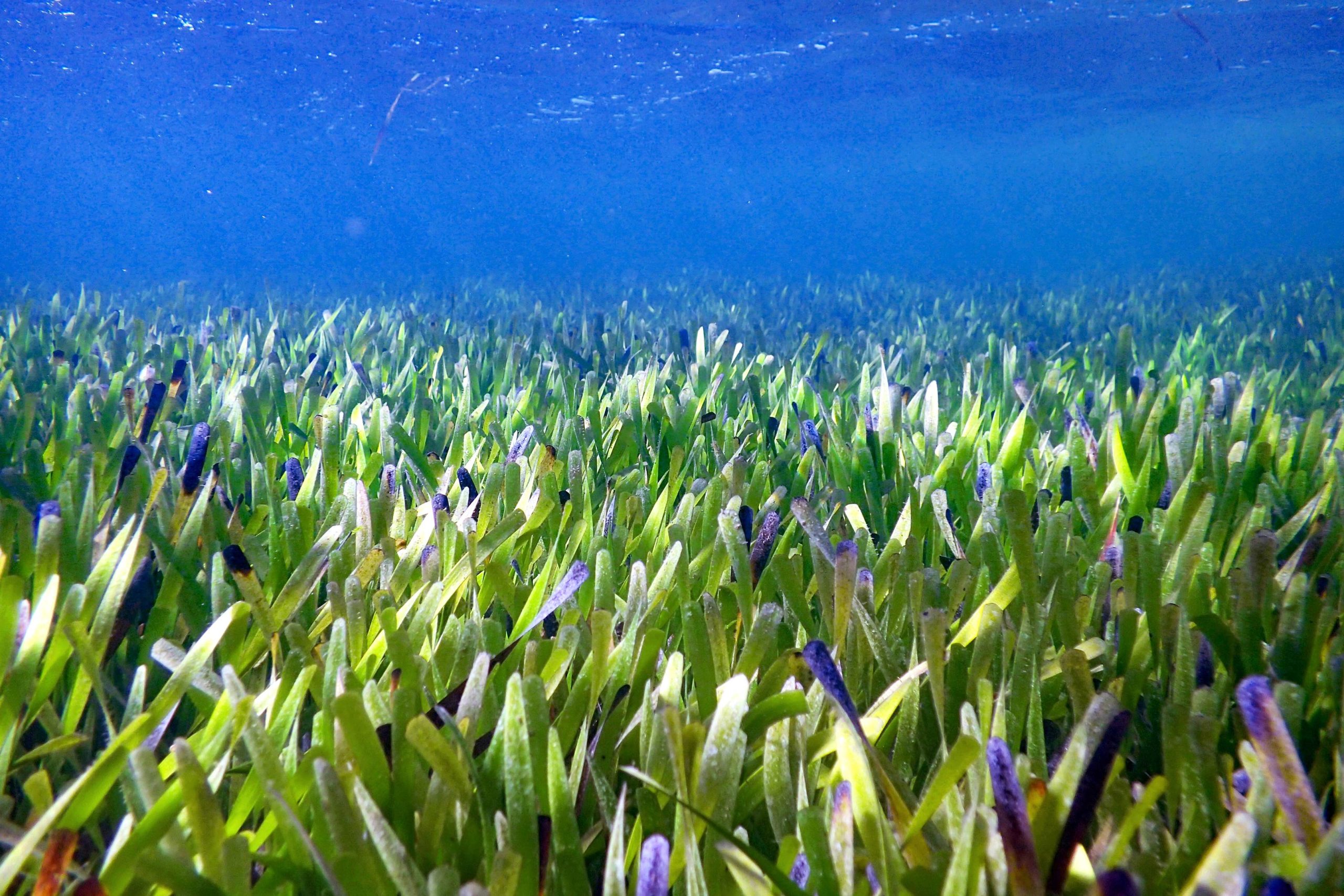
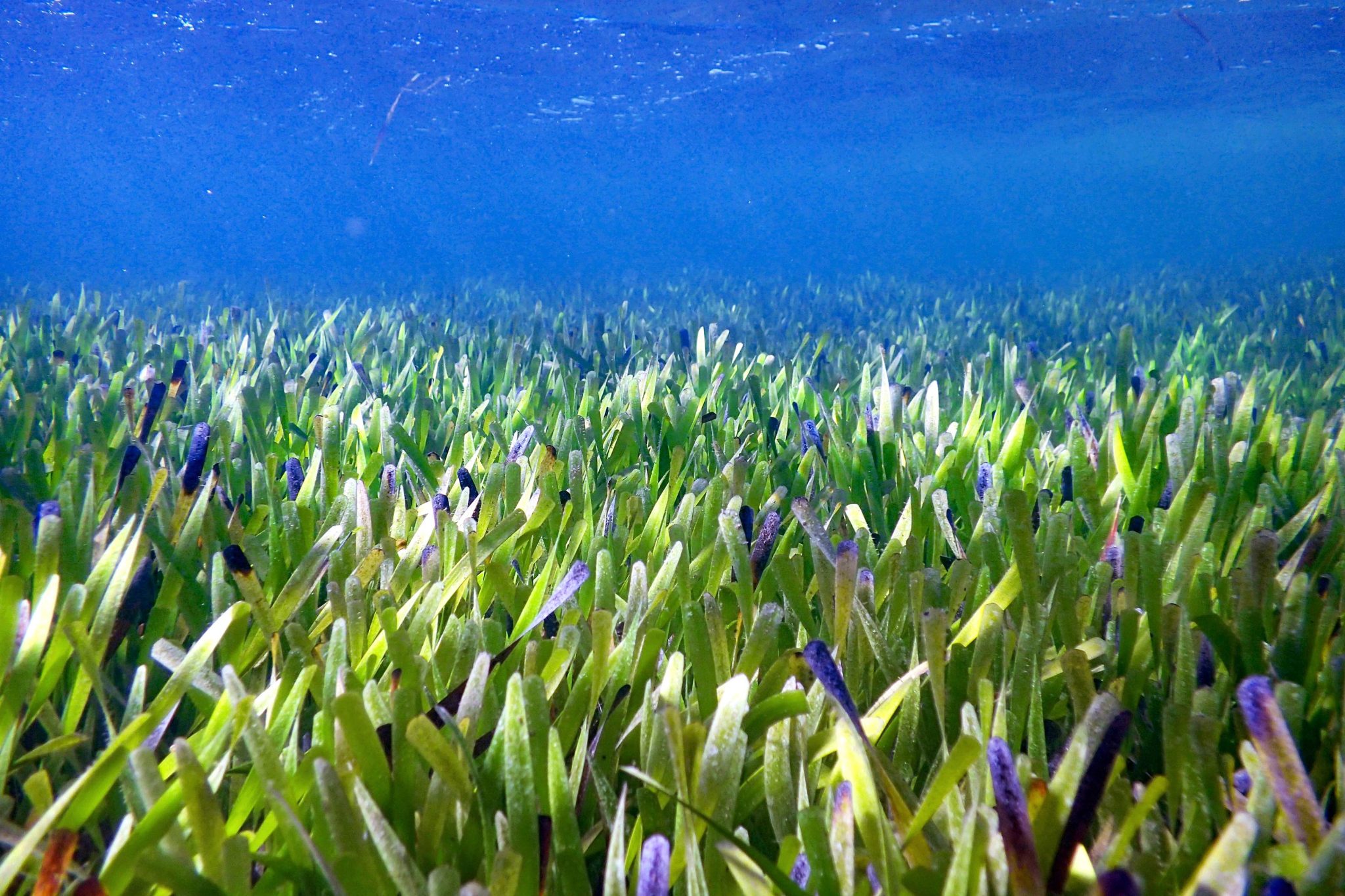
Ribbon weed, Posidonia australis, meadow in Shark Bay, Western Australia. Credit: Rachel Austin, University of Western Australia
Australian scientists believe they have discovered the world’s biggest plant – and they estimate it’s at least 4,500 years old.
The ancient and incredibly resilient seagrass stretching across 112 miles (180 km) was located by researchers from The University of Western Australia (UWA) and Flinders University.
The discovery of the single plant or ‘clone’ of the seagrass Posidonia australis in the shallow, sun-drenched waters of the World Heritage Area of Shark Bay in Western Australia is detailed in a new study published in Proceedings of the Royal Society B.
Senior author, evolutionary biologist Dr. Elizabeth Sinclair, from UWA’s School of Biological Sciences and the UWA Oceans Institute, says the project began when scientists wanted to understand how genetically diverse the seagrass meadows in Shark Bay were, and which plants should be collected for seagrass restoration.
“We often get asked how many different plants are growing in seagrass meadows and this time we used genetic tools to answer it,” Dr. Sinclair says.
UWA student researcher Jane Edgeloe, lead author of the study, says the team sampled seagrass shoots from across Shark Bay’s variable environments and generated a ‘fingerprint’ using 18,000 genetic markers.

The shallow, salty waters of Shark Bay. Credit: Angela Rossen
“The answer blew us away – there was just one!” Ms. Edgeloe said. “That’s it, just one plant has expanded over 180km in Shark Bay, making it the largest known plant on Earth.
“The existing 200km2 of ribbon weed meadows appear to have expanded from a single, colonizing seedling.”
Co-author Flinders University ecologist Dr. Martin Breed was part of the research group. He says the study presents a real ecological conundrum.
“This single plant may in fact be sterile; it doesn’t have sex. How it’s survived and thrived for so long is really puzzling. Plants that don’t have sex tend to also have reduced genetic diversity, which they normally need when dealing with environmental change,” says Dr. Breed, from the College of Science and Engineering at Flinders University.
“Our seagrass has seen its fair share of environmental change too. Even today, it experiences a huge range of average temperatures; from 17 to 30 °C. Salinities from normal seawater to double that. And from darkness to extreme high light conditions. These conditions would typically be highly stressful for plants. Yet, it appears to keep on going.
“How does it do it? Well, we reckon its genes are very well-suited to its local, but variable, environment and it also has subtle genetic differences across its range that help it deal with the local conditions,” Dr. Breed says.
Dr. Sinclair said what makes this seagrass plant unique from other large seagrass clones, other than its enormous size, is that it has twice as many chromosomes as its oceanic relatives, meaning it is a polyploid.
“Whole genome duplication through polyploidy – doubling the number of chromosomes – occurs when diploid ‘parent’ plants hybridize. The new seedling contains 100 percent of the genome from each parent, rather than sharing the usual 50 percent,” Dr. Sinclair says.
“Polyploid plants often reside in places with extreme environmental conditions, are often sterile, but can continue to grow if left undisturbed, and this giant seagrass has done just that.
“Even without successful flowering and seed production, it appears to be really resilient, experiencing a wide range of temperatures and salinities plus extreme high light conditions, which together would typically be highly stressful for most plants.”
The researchers have now set up a series of experiments in Shark Bay to understand how this plant survives and thrives under such variable conditions.
For more on this discovery, see World’s Largest Plant Stretches 112 Miles in Western Australia’s Shark Bay.
Reference: “Extensive polyploid clonality was a successful strategy for seagrass to expand into a newly submerged environment” by Jane M. Edgeloe, Anita A. Severn-Ellis, Philipp E. Bayer, Shaghayegh Mehravi, Martin F. Breed, Siegfried L. Krauss, Jacqueline Batley, Gary A. Kendrick and Elizabeth A. Sinclair, 1 June 2022, Proceedings of the Royal Society B.
DOI: 10.1098/rspb.2022.0538
The research was made possible through a collaboration between UWA, Flinders University and Kings Park Science (WA Department of Biodiversity Conservation and Attractions). It was funded by the Australian Government’s National Environmental Science Program Marine Biodiversity Hub and the Australian Research Council.