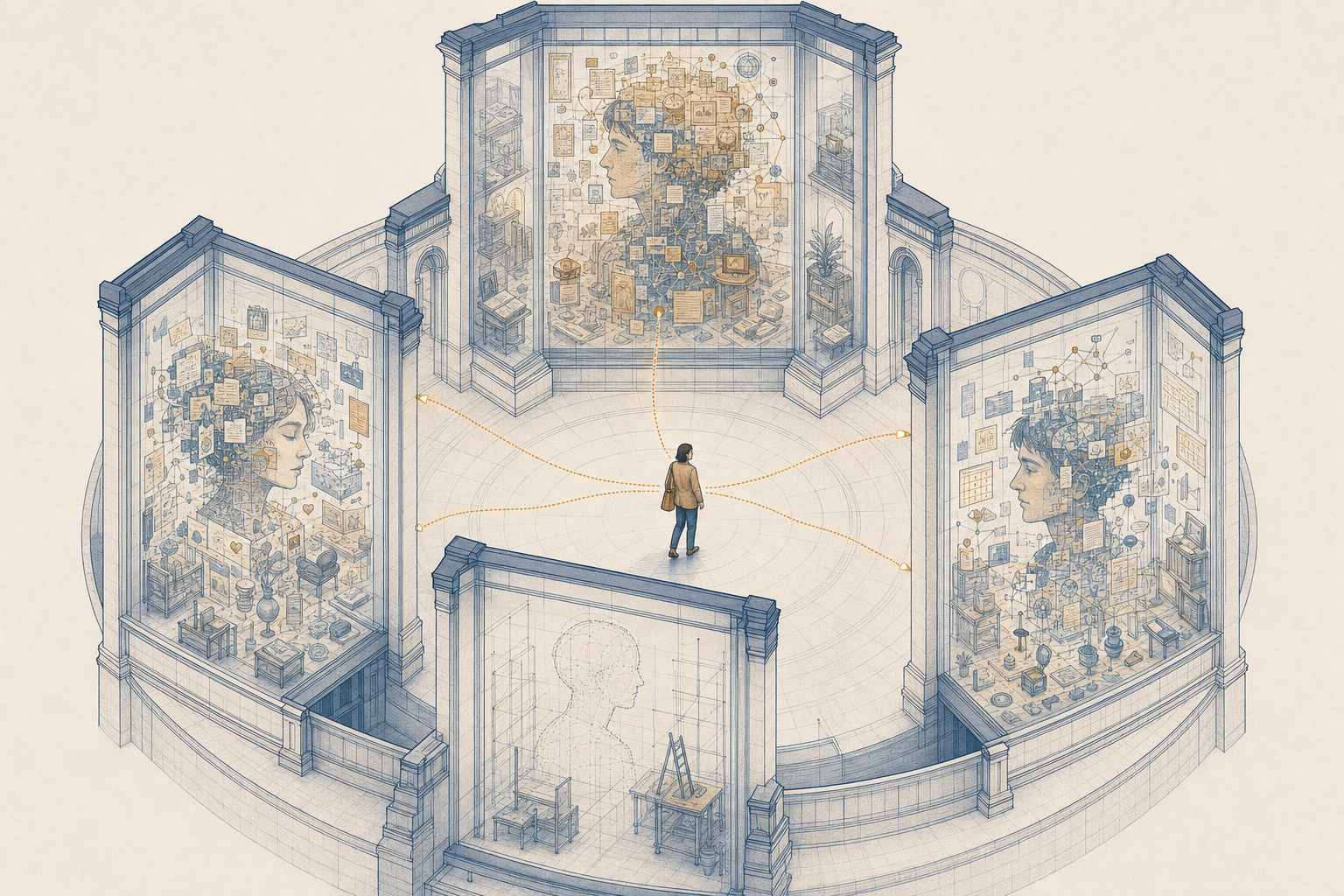
As a math educator at the high school and middle school levels, I lived for the moments when students’ furrowed brows ever-so-slightly began to unfold and smiles emerged.
Those “aha” moments were often accompanied with a gleeful, “I get it!” I refer to those epiphanies, when the metaphorical light bulb above a student’s head switches on, as “luminations.”
Many of those luminations surfaced because the lessons my students engaged with were designed to promote student inquiry and prioritize cultural relevance. Though some argue that mathematics is culturally independent, I can say from experience that it is anything but. Culture embodies our deepest collective social norms and beliefs, and provides the reference points for future learning. The brain makes sense of the world, and mathematics, through culture.
As the math educator in residence at Just Equations, a nonprofit focused on the intersection of math and equity, I research math education and I think a lot about my years in the classroom.
Brain science research is increasingly bolstering the idea that math instruction rooted in culturally relevant problem-solving helps students draw from their lived experiences and activates distinct areas of the brain, producing durable and deep learning.
Creating Community-Connected Learners
My geometry students did this kind of creative mathematical reasoning during a series of lessons that used geometric modeling to address food apartheid in Lawrence, Kansas.
In one of the lessons, students accessed the Agriculture Department’s Food Access Research Atlas to locate food deserts in their city. The goal was to develop a proposed site for a healthy grocery store or alternative option for fresh, wholesome food. The location students identified had to be strategically located for equitable access, accounting for the needs of community members most limited by transportation and low economic support.

During this lesson, students identified a bridge as a barrier in Lawrence that restricted convenient access to healthy and affordable foods. Working in small groups, they described both the physical structures and city policies that prevent the development of a grocery store in the area, thus sustaining the food desert.
Students constructed a triangle for the perimeter of the geographical space containing the food desert, then applied mathematical concepts to identify whether the centroid, circumcenter, incenter or orthocenter of the triangle would provide the most equitable access to the residents.
Lessons like these promote mathematical investigations within community-oriented contexts and require deep analysis. Students must think holistically about a real-world problem, and use mathematical tools to arrive at a solution. This process is meant to leverage not only the brain science behind complex mathematical reasoning, but also students’ passion for making change in the world on their own terms.
This lesson required spatial reasoning skills, which engage the parts of the brain most closely associated with mathematical thinking. A 2018 meta-analysis of functional magnetic resonance imaging (fMRI) studies of children ages 14 and younger demonstrated that math performance in children emerges from areas of the brain that are associated with number processing, such as the parietal and frontal areas. What’s interesting is that the parietal lobe also integrates sensory information, such as the body’s awareness of where it is in space, including in relation to itself, creating a spatial mental map to represent the world.
Sensory information is also significant to how people develop an awareness of identity and their relationships to the surrounding environment and sociocultural experiences within that environment. Therefore, mathematics grounded in sociocultural contexts helps students make sense of their world and make connections with new content.
Lighting Pathways in the Brain
The process the brain goes through during this kind of mathematical thinking can actually be observed in real time. In a study conducted at Carnegie Mellon University in 2016, researchers monitored the brain activity of study participants as they confronted complex math problems that demanded creative mathematical reasoning.
That research identified four distinct stages of problem solving — encoding, planning, solving and responding — that engaged diverse areas of the brain. That kind of increased brain activity has been shown to lead to better performance and higher retention of learning.
Just as student engagement in creative and constructive processes when learning mathematical reasoning has beneficial effects on learning and long-term memory, culturally responsive mathematics uses culture as a scaffold for deeper connections, building students’ brain power and improving information processing skills.
Importantly, lessons like the one addressing food apartheid in Lawrence also make math feel more relevant by connecting students with vital questions about systemic structural, racial and economic barriers. They offer an invitation to analyze how mathematics can be applied to promote civic engagement, advocacy, policy change and increased access to resources.
Geneva Gay, a professor of education at the University of Washington-Seattle, wrote that culturally responsive instruction allows teachers and students alike to develop “social consciousness and critique; cultural affirmation, competence, and exchange; community-building and personal connections; individual self-worth and abilities; and an ethic of caring.” When we cultivate learning spaces designed to inspire and spark curiosity, students begin to forge their own mathematical identities. They come to see themselves as capable learners and doers of mathematics, and as essential members of the mathematical community.
This science suggests that all teachers can make use of these approaches. There are a wide range of resources available to help educators employ culturally-responsive brainstorming, visual imagery, storytelling, and interactive pedagogy in their own classrooms. Teachers who do so will foster not only durable academic success, but independent and lifelong learners.